API Design Best Practices for Scalable SaaS Applications
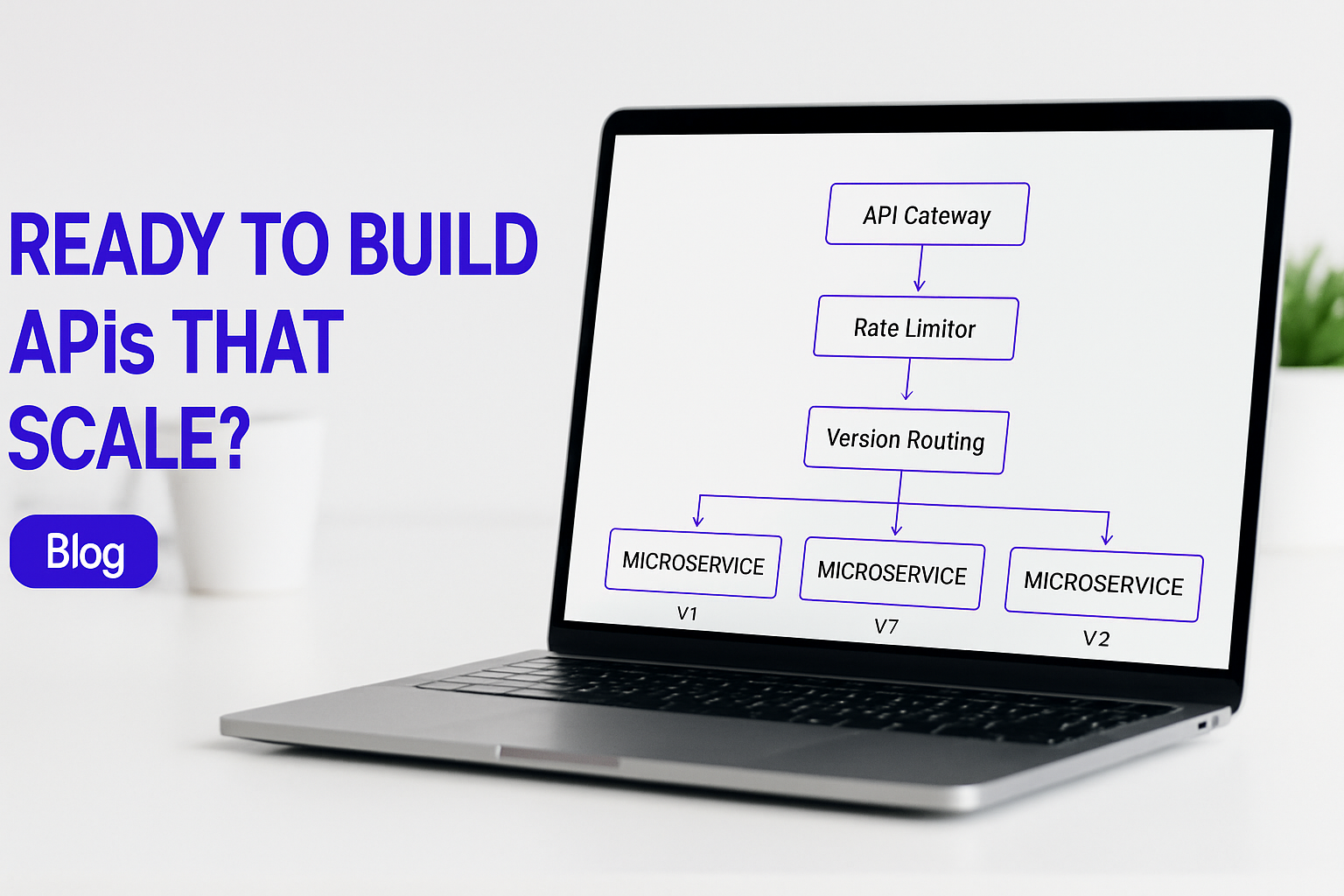
API design best practices are what separate a SaaS platform that handles 10,000 clients from one that falls apart at 500. Get your API contract wrong early, and every integration, every partnership, and every scaling event becomes a firefight. Get it right, and your platform becomes the one clients build on.
The API That Breaks at Scale: A Common Pattern
Most SaaS APIs work fine in the first month. Then the cracks show: inconsistent response shapes, no rate limiting, and versioning that silently breaks existing integrations. By the time you notice, you're managing two parallel API versions, patching bugs in both, and your engineers are drowning in support tickets.
The root cause isn't incompetence. It's that the API was designed for today's load, not tomorrow's. When you have 1,000 clients each firing 10,000 requests per day, the problems that were invisible at 20 clients become outages. API design best practices aren't a nice-to-have you add in year two. They're the architecture decisions that determine whether your platform survives growth or collapses under it.
Most teams recognize the problem only after a client integration breaks in production. At that point, the redesign costs ten times what upfront planning would have. The pattern is consistent and entirely avoidable.
Why API Design Matters More Now Than Ever
Your API is now your primary product surface. Clients build workflows against it, third-party tools integrate with it, and enterprise buyers evaluate it before signing contracts. A poorly designed API creates technical debt that compounds with every new client.
Every inconsistency you ship today becomes a normalization burden for every developer who integrates with you tomorrow. Every missing error code is hours of debugging for someone else's engineering team. Competitors with clean, predictable APIs win integration deals because their tools play nicely with existing stacks. Clients don't switch because of features alone. They switch because integrating with your API is painful.
The SaaS companies that invest in API design upfront spend significantly less on integration support, close enterprise deals faster, and create real switching costs. When clients have built production systems on top of your API, they don't leave lightly.
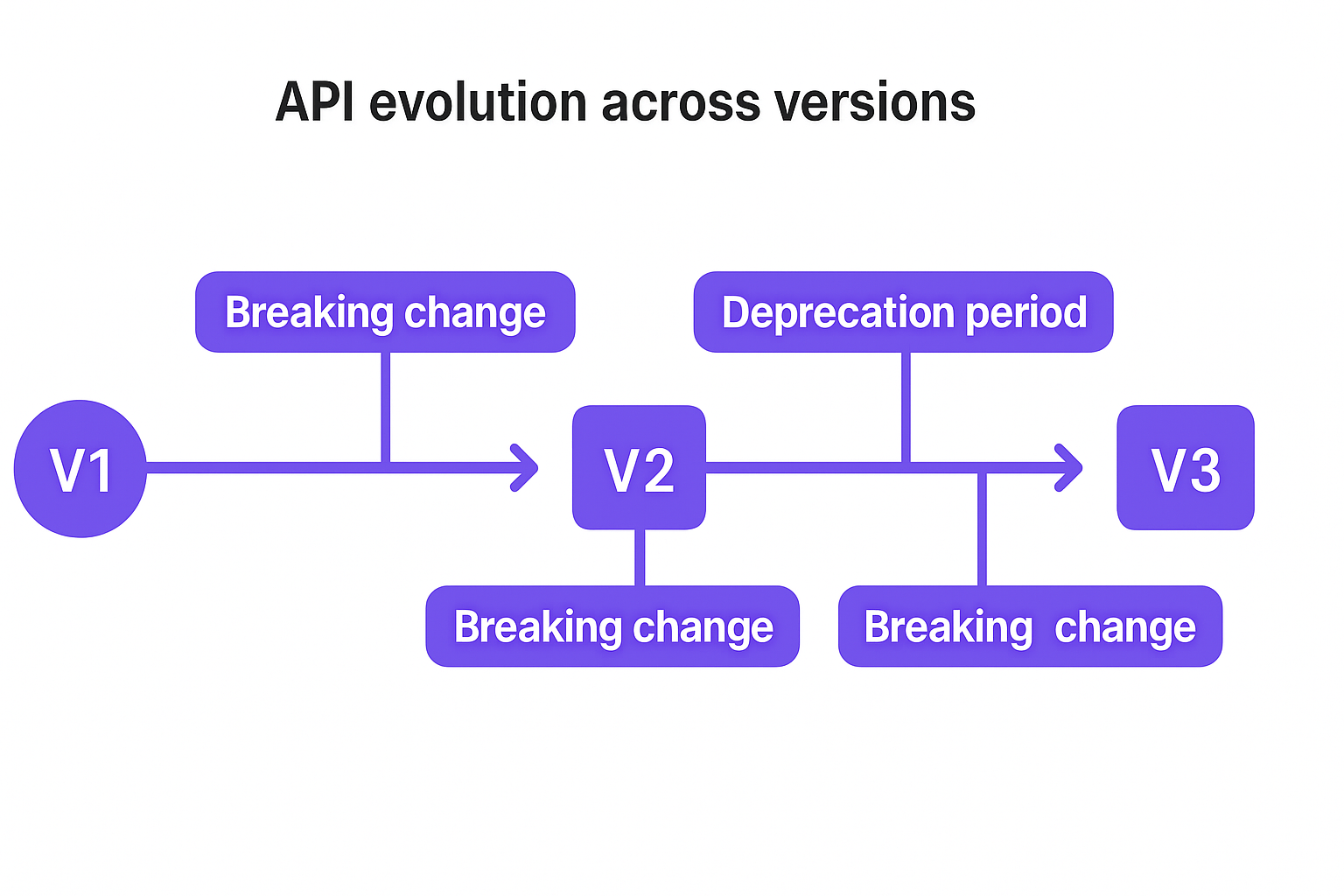
API versioning timeline showing v1, v2, v3 with 12-month support windows
The Framework: Five Pillars of Bulletproof API Design
A well-designed API rests on five principles: consistency, versioning, error handling, rate limiting, and documentation. Every production-grade SaaS API needs all five from day one, not layered on later when things break.
Consistency
Every endpoint should follow the same URL structure, naming convention, and response envelope. A client developer should be able to predict the shape of a response before they call the endpoint. If your users collection returns { data: [], meta: {} }, your orders collection should return the same shape. Surprise is the enemy of a healthy integration ecosystem.
Pick a naming convention and enforce it everywhere. If you choose snake_case, use it in every field across every endpoint. If you choose camelCase, the same rule applies. Inconsistency forces every integration developer to write defensive normalization code. That code breaks. They blame you.
Versioning
Plan for breaking changes from day one. Start at v1, not v0. Clients should be able to treat v1 as a stable contract. When you need to ship a breaking change, you move to v2 and commit to supporting v1 for at least 12 to 18 months.
URL versioning (/v1/users, /v2/users) is the most practical choice for most SaaS platforms. It's easy to cache, easy to route, and easy for client developers to understand at a glance. Header-based versioning (Accept: application/vnd.myapi.v2+json) is semantically cleaner but requires more discipline from both sides. For most teams, URL versioning wins on practicality.
Error Handling
Return meaningful HTTP status codes every time, without exception. 400 for bad input. 401 for unauthenticated requests. 403 for authorization failures. 429 for rate limit violations. 500 for server errors. RFC 6585 formally defines 429 as the standard response for exceeded rate limits, and every modern client library knows how to handle it.
Every error response should include a machine-readable code, a human-readable message, and a field reference when the error relates to a specific input. A response body of { "error": "Something went wrong" } is not error handling. It's a debugging tax on your clients.
Rate Limiting
Implement tier-based rate limits before you ship, even if the limits are generous. Clients need to know their quota upfront, see their consumption in response headers (X-RateLimit-Limit, X-RateLimit-Remaining, X-RateLimit-Reset), and understand exactly what happens when they hit the ceiling.
Panic-implementing rate limiting after you're already under load is one of the most common ways to break existing clients. Bake it in from the start. The cost is low; the downside of skipping it is not.
Documentation
Ship a live API reference, not a PDF. The OpenAPI Initiative's OpenAPI Specification is the industry standard for documenting REST APIs and generating client libraries. Use it. From a single spec, you can generate interactive documentation, client SDKs, and contract tests. Clients get a single source of truth. Your docs stay in sync with your code because they're generated from the same artifact.
A changelog is not optional. Clients integrate against your API and expect it to behave consistently. When you change behavior without documenting it, they discover the change when their production code breaks. That erodes trust faster than almost any other failure.
Building APIs That Grow With Your Customers
Scalable API architecture starts with a clean data model. Design your resource hierarchy around your business domain, not your database schema. If your domain is projects and tasks, your API should expose /projects/{id}/tasks, not leak internal ORM table names or auto-increment IDs that hint at your database structure.
Use REST conventions consistently. GET for reads, POST for creates, PUT or PATCH for updates, DELETE for deletes. Predictability is worth more than cleverness. When a developer can correctly guess how to call an endpoint they've never used before, your API is doing its job.
Design for idempotency. A client should be able to retry a POST request without creating duplicate records. Use idempotency keys on any mutation that might be retried under unstable network conditions. This is especially important for payment, order, and provisioning endpoints where duplicate side effects are costly.
Pagination belongs in every list endpoint, even the ones returning five rows today. Design every collection response to accept limit and offset from day one. When you hit 50,000 records, you don't retrofit pagination under pressure. Plan for filtering and sorting at the same time. Use standard query parameters like ?filter=status:active&sort=-created_at. Bolting these on after the fact is painful and often requires a versioning event.
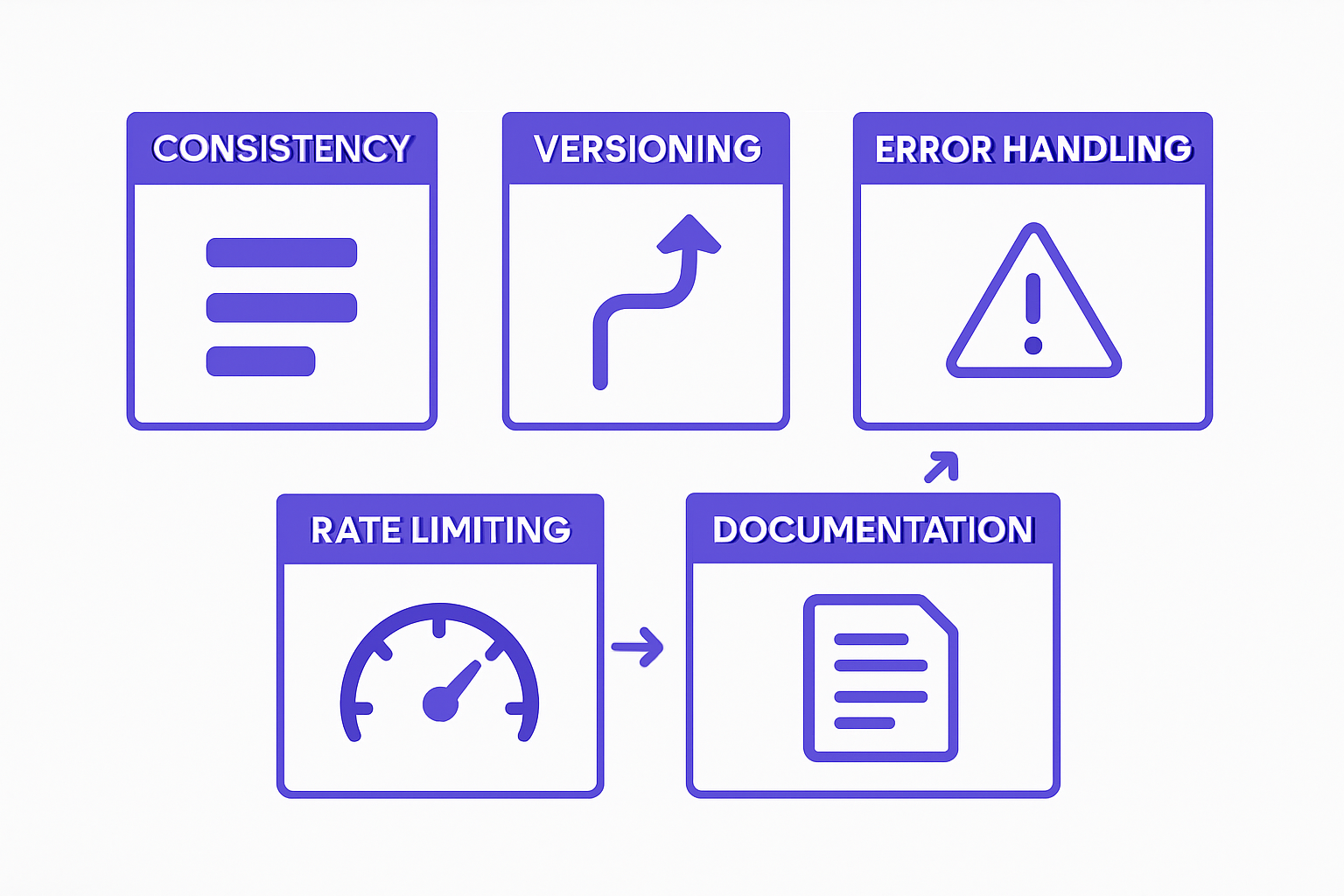
Five pillars framework with consistency, versioning, errors, rate limits, and docs
Ready to architect a platform that scales without collapsing?
Pitfalls That Trip Up Even Experienced Teams
Even strong engineering teams make the same API mistakes. Most of them are invisible until you're at scale, and by then the fix is expensive.
Leaking implementation details is one of the most common. Your API returns raw database IDs, internal field names, or timestamps from your ORM. Clients build against those details. When you refactor your schema, you break them. Your API should present a stable domain model, not a window into your database.
Inconsistent naming compounds across every new endpoint. Some return created_at, others return createdAt. Some use snake_case, some use camelCase. Every inconsistency is code that a client developer has to write to normalize your responses. That code is a liability they associate with your platform.
Silent failures are trust killers. An API call returns 200 but the requested action didn't actually happen. Always fail loudly. If something went wrong, the HTTP status code should say so, and the response body should explain what.
Changing response shapes without versioning is perhaps the most damaging pattern. You add a field, rename an existing one, or restructure a nested object. You don't increment the version because it didn't seem like a big change. The client's parsing code breaks in production. They blame you. You lose the trust it took months to build.
Shipping without a changelog is the silent version of the same problem. Clients can't anticipate changes they don't know about. Give them the documentation, give them advance notice, and give them a migration path.
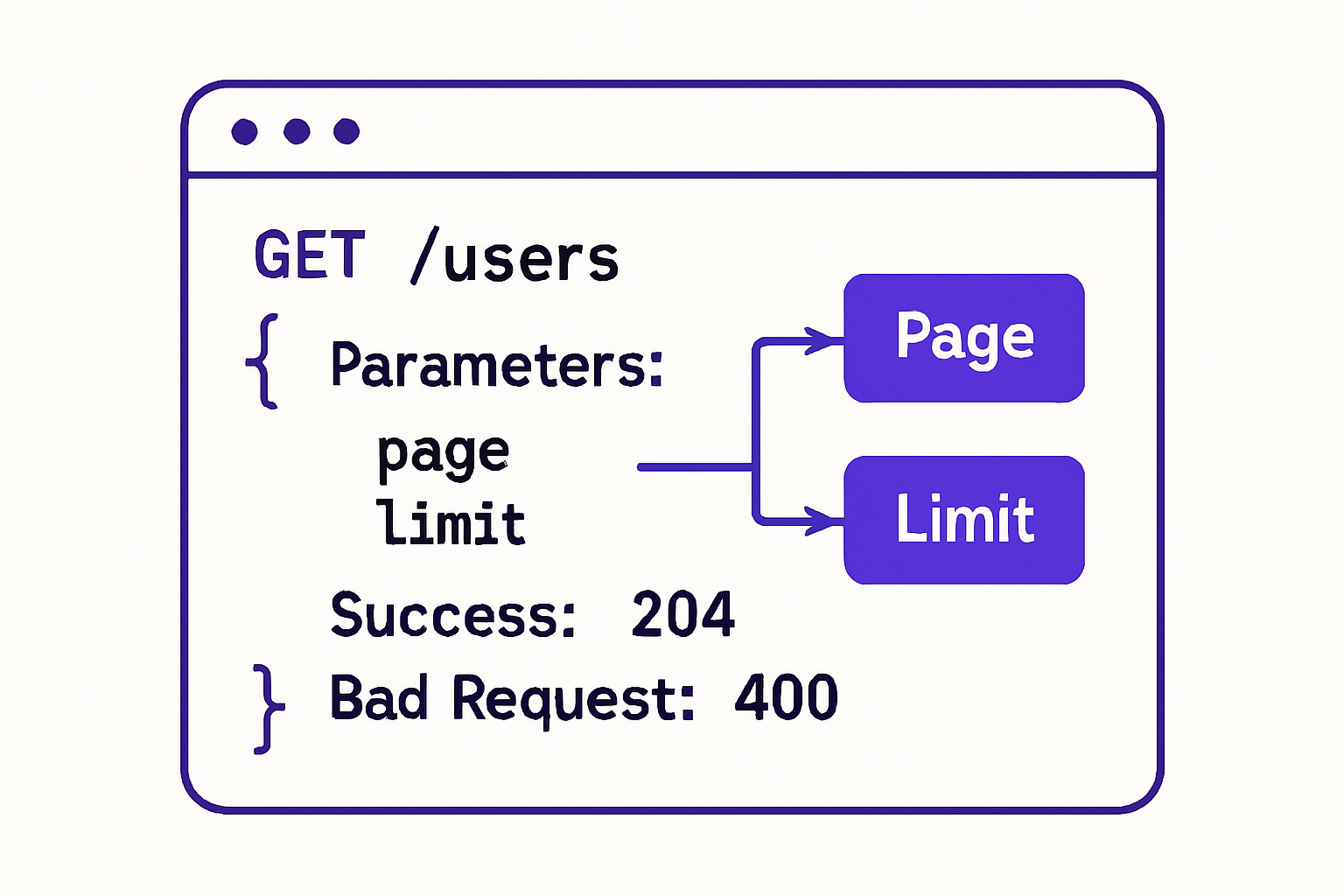
REST API endpoint example showing proper structure, error handling, and pagination
How GroovyMark WebX Approaches API Architecture
At GroovyMark WebX, we design the API contract before a line of code is written. The database schema, the domain model, and the API surface evolve together from the same document. That's the only way to avoid the misalignment between internal data structures and external contracts that creates technical debt for years.
We use OpenAPI specifications on every platform we build. Whether it's an ERP integration, a client portal, or a custom SaaS platform, every API ships with a generated live reference, contract tests that run in CI, and a versioning policy that's documented for clients from day one. The spec is the single source of truth. Docs can't drift from code when the docs are generated from the same artifact.
Rate limiting, versioning, and structured error handling are built into every API we ship. Not retrofitted after the first incident. Teams that work with GroovyMark WebX get platforms that behave the same way at 10 users and at 10,000 users because these constraints are architectural decisions, not features added later.
When clients need to connect a new system to a legacy tool or integrate a legacy system safely, we apply the same principles. Clean API contracts mean integrations that work the first time and keep working as both systems evolve. We've shipped dozens of these, and the patterns are well-established.
See how we've scaled platforms for hundreds of clients to understand the depth of what we build and how these principles translate to production systems.
If you're designing a SaaS platform from scratch or dealing with an API that's becoming a liability, talk to us about how we architect these platforms. The cost of getting it right upfront is a fraction of the cost of replacing it after your clients have built on it.
API design is an architectural decision that compounds. Get it right and your platform becomes the one clients trust with their production workflows. Get it wrong and every engineering sprint is spent managing the fallout. GroovyMark WebX builds APIs that are designed to outlast the conditions they were built in.
If you're building a platform that needs to scale without breaking the clients depending on it, let's talk about what that architecture looks like for your specific domain.
Let's design your API architecture together.
Frequently asked questions
What's the difference between URL versioning and header-based versioning?
URL versioning (/v1/users, /v2/users) is simpler and easier to cache, but adds complexity to routing. Header versioning (Accept: application/vnd.myapi.v2+json) is cleaner semantically but requires more client discipline. We recommend URL versioning for SaaS APIs because it's simpler for client developers to understand and debug.
How do I know what rate limits to set?
Start by understanding your infrastructure capacity: how many requests per second can your database and servers handle? Then divide by your expected customer count, and tier your limits by plan level. If you're unsure, GroovyMark WebX can help you model this—we've built dozens of APIs and know the patterns that work without crushing your infrastructure.
Should I design my API based on my database schema?
Absolutely not. Your API is a contract with your clients. Your database is an implementation detail. Design your API around your business domain and your clients' workflows, then build a database that supports it. When you need to migrate databases or refactor your schema, your API stays stable.
What happens if I need to make a breaking change?
Plan for it from the start. Version your API before launch, document your breaking change policy (e.g., 'we support the previous version for 18 months'), and communicate the change 6 months before you sunset the old version. GroovyMark WebX builds migration paths into every API we design, so breaking changes are smooth and clients have time to adapt.
How do I keep API documentation current?
Use an OpenAPI specification and generate documentation automatically. Never write docs by hand—they'll be out of sync within weeks. Tools like Swagger UI or Stoplight turn your spec into a live, interactive reference that clients can test against. If you're building a custom platform, we integrate OpenAPI specs from day one, so your docs and code stay in sync forever.