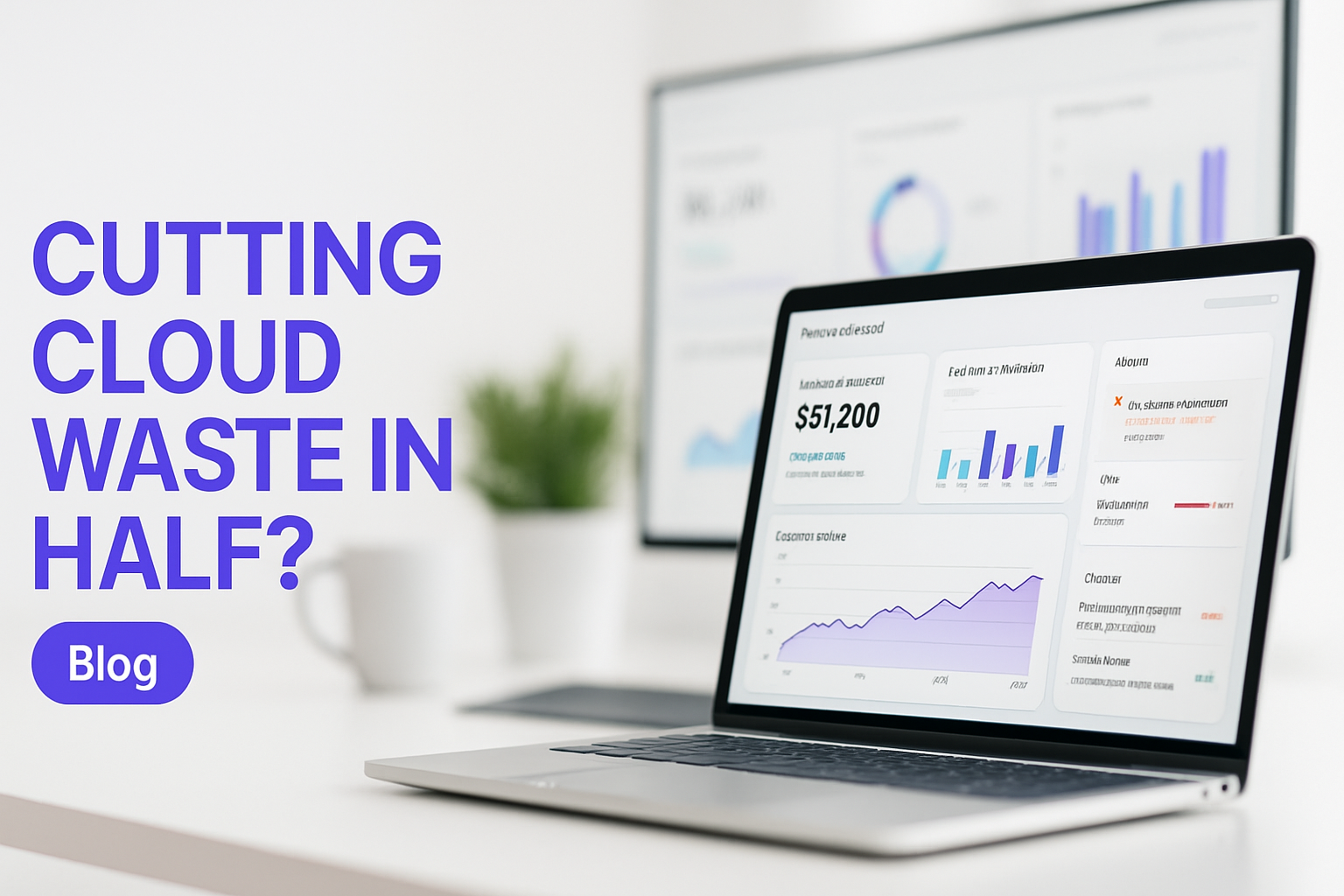
Cost Optimization in Cloud Infrastructure: Stop Burning Money on Waste
Cloud cost optimization is the discipline most founders ignore until their AWS bill hits five figures. This post shows you how to identify where cloud spend is actually leaking, which three levers drive the biggest savings, and how real-time monitoring can cut infrastructure waste by 30, 40% without touching production.
Why Your Cloud Bill Keeps Climbing (And Why You Don't See It Coming)
Cloud bills grow silently because the charges are invisible until the invoice arrives. Reserved instances sit idle while on-demand workloads spin up beside them. Data transfer fees accumulate across regions. Orphaned snapshots compound every month. By the time you open the bill, the damage is done.
Here's a pattern we see constantly: a team buys reserved capacity for a workload that gets refactored six months later. The reservation keeps billing. Nobody notices because the alert was set on total spend, not per-resource spend. That's a $10,000/month leak hiding in plain sight.
Compute running 24/7 for a workload that actually needs four hours a day is another classic. Auto-scaling rules get configured once during launch and never revisited. The Flexera 2024 State of the Cloud Report shows 31% of cloud spend is wasted across enterprises, with visibility gaps cited as the primary cause. That number should bother you, because it means roughly one in three dollars you're spending right now is producing nothing.
The core problem isn't that cloud is expensive. It's that the billing model is designed for granular usage, and most teams are managing it at the level of a monthly summary.
The Real Cost of Ignoring Cloud Spend
Ignoring cloud spend doesn't just hurt your hosting bill. It distorts financial forecasting, undermines product decisions, and hands a margin advantage to competitors who've done the work you haven't.
When your finance team can't trust the cloud spreadsheet, your CFO can't forecast accurately. That's not a small operational inconvenience. That's a board-level problem. Product decisions get made without knowing the infrastructure cost of a given feature, so teams ship things that are technically correct but economically wasteful.
Gartner cloud cost optimization research confirms that real-time monitoring reduces cloud waste by 25, 40% within the first year. The gap between teams who have that visibility and those who don't is compounding month over month.
Your competitors aren't waiting. The ones with cost discipline can undercut your pricing, invest more in acquisition, or simply survive a market correction that squeezes everyone's margins. You're effectively subsidizing their advantage with cloud waste.

Operations engineer reviewing cloud cost data and optimization opportunities
The Three Levers of Cloud Cost Optimization
The three levers of cloud cost optimization are consumption control, pricing strategy, and architecture design. Most teams focus on just one. The companies that cut waste by 30, 40% work all three in parallel, starting with the fastest wins and planning the longer architectural work in parallel.
Consumption is the most immediately actionable. Right-size your instances. Kill idle workloads. Schedule non-production environments to shut down nights and weekends. This alone recovers 15, 20% for most teams, often within the first 30 days.
Pricing is about matching commitment level to workload predictability. The AWS Cost Optimization Best Practices Guide details how reserved instances and auto-scaling together deliver sustainable 30% savings over on-demand pricing, but only when you're committing to workloads that won't change. Buying reserved capacity for a service you might retire in six months isn't optimization, it's a different kind of waste. Use spot instances for fault-tolerant batch jobs where interruption is acceptable.
Architecture is the hardest lever but often the highest-value one. Full-table database scans, synchronous jobs that could be async, over-provisioned RDS instances running at 8% CPU. These are patterns that cost you every hour they're running. Refactoring them into leaner, event-driven designs doesn't just save money, it usually improves performance too. Plan this as a multi-quarter effort, not a sprint.
How to Implement Cost Optimization Without Breaking Production
Implementing cloud cost optimization safely starts with a structured audit, not an immediate cull. The teams that break production doing this skip the audit step and start turning things off based on assumptions. Don't do that.
Audit first. Tag all resources by team, project, and criticality. Export 90 days of cost data. Identify your top 10 cost drivers by dollar value. You'll almost certainly find orphaned infrastructure, over-provisioned databases, and idle load balancers you'd forgotten existed.
Monitor live. Set up dashboards that show spend by hour, not by month. When a database query suddenly consumes 5x normal compute, you want an alert in minutes, not a line item in next month's invoice. This is where AI-driven automation starts paying for itself, automatically flagging anomalies and routing alerts to the right person without manual intervention.
Automate remediation. Turn off non-production environments on a schedule. Set auto-scaling policies based on actual demand curves, not worst-case provisioning from two years ago. If an instance has been idle for 30 days, generate an automated ticket to review it.
Right-size incrementally. Start with obvious candidates: over-provisioned dev databases, unused load balancers, staging environments running full production specs. Measure before and after. Don't guess; confirm.
Commit strategically. Buy 1-year or 3-year reserved instances only for stable workloads. On-demand for everything else until the pattern is clear.
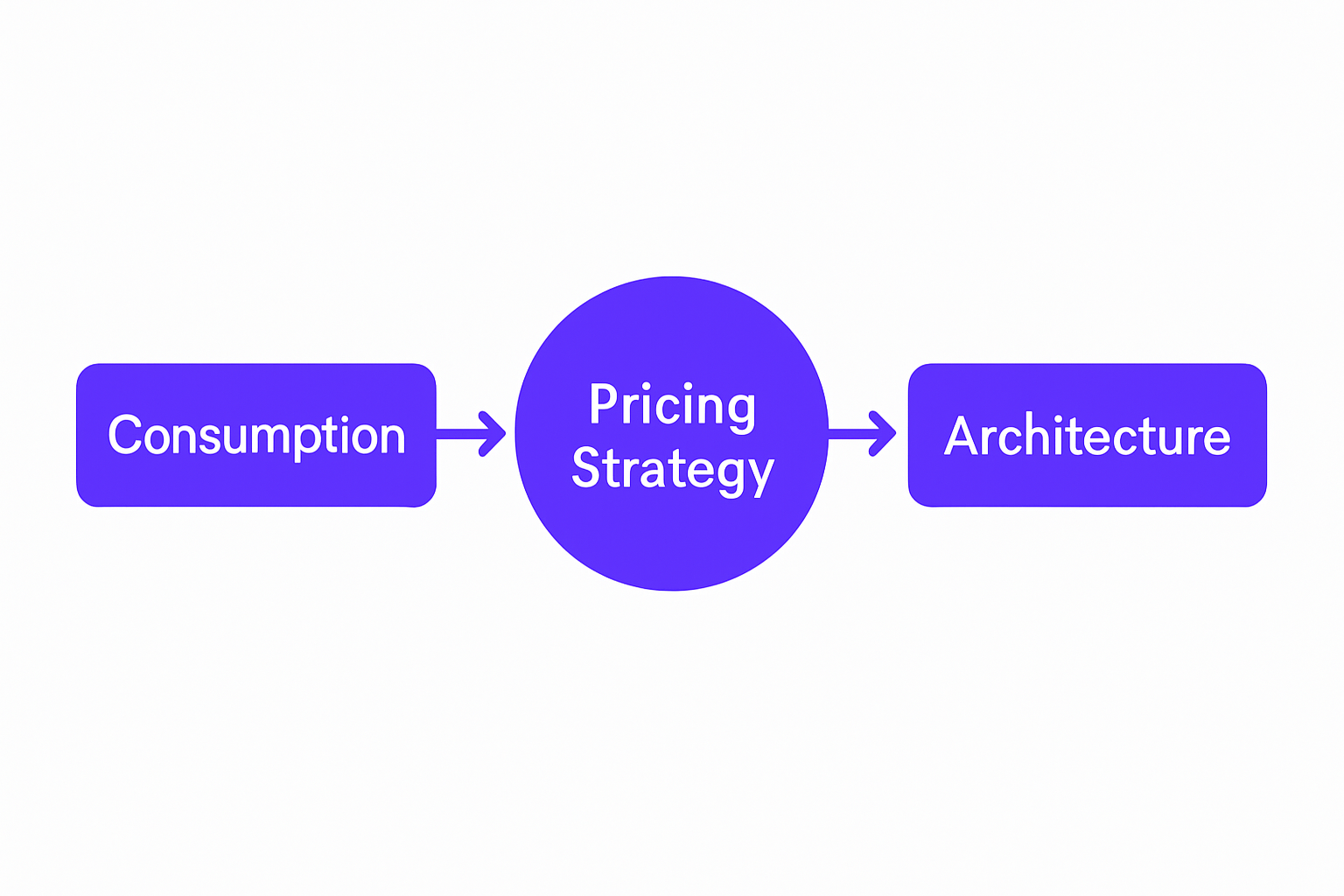
Three pillars of cloud cost optimization: consumption, pricing, and architecture
Ready to cut cloud waste? Let's audit your infrastructure.
Three Mistakes That Sabotage Cost Optimization
The most damaging mistake in cloud cost optimization isn't a technical error. It's treating optimization as a one-time event. Cost creep is continuous. New services get deployed, old ones linger, team size grows, and nobody updates the baseline. Six months after your last audit, you're back where you started.
The second mistake is cutting costs without measuring impact first. Shutting down a server to save $500/month sounds sensible until you discover that a critical batch job runs on it at 3 AM and now fails silently. Every change needs a runbook and a rollback plan. Every shutdown needs a dependency check. This isn't paranoia, it's process.
Optimization without measurement is just guessing with consequences. Map your dependencies before you touch anything in production.
The third mistake is treating cloud cost as a purely engineering problem. Finance needs visibility into what drives the bill and why it changes. Product needs to own the trade-off decisions between features and infrastructure cost. When those conversations happen only inside the engineering team, you get technically correct optimizations that nobody in the business actually understands or trusts.
You can see how other founders solved this by building cross-functional visibility into their cloud operations, giving finance, product, and engineering a shared source of truth.
Your Next Move: Real-Time Cost Command Center
The single most effective thing you can do after reading this is build a real-time operations dashboard that shows cloud spend, usage, and performance side by side. Not monthly. Not weekly. Live.
Connect your cloud provider's cost API directly to a single view. AWS Cost Explorer, GCP Billing Export, Azure Cost Management all expose the data. The question is whether you have a purpose-built layer that makes it actionable rather than just visible. Automated alerts when spend exceeds a threshold, when an instance crosses 30 days of idle, or when a new resource gets deployed without a cost tag.
The Real-Time Operations & IoT Dashboard that GroovyMark WebX builds for operations teams does exactly this. It pulls live cost and performance data from your cloud provider into a command center designed around your specific workloads, teams, and alerting thresholds. When waste appears, your team sees it in minutes and can act before it compounds.
Teams that work with GroovyMark WebX on this typically find their first 20% in savings within 60 days, before any architecture work begins, purely through visibility and automated remediation. The architecture improvements that come next push that to 35, 40%.
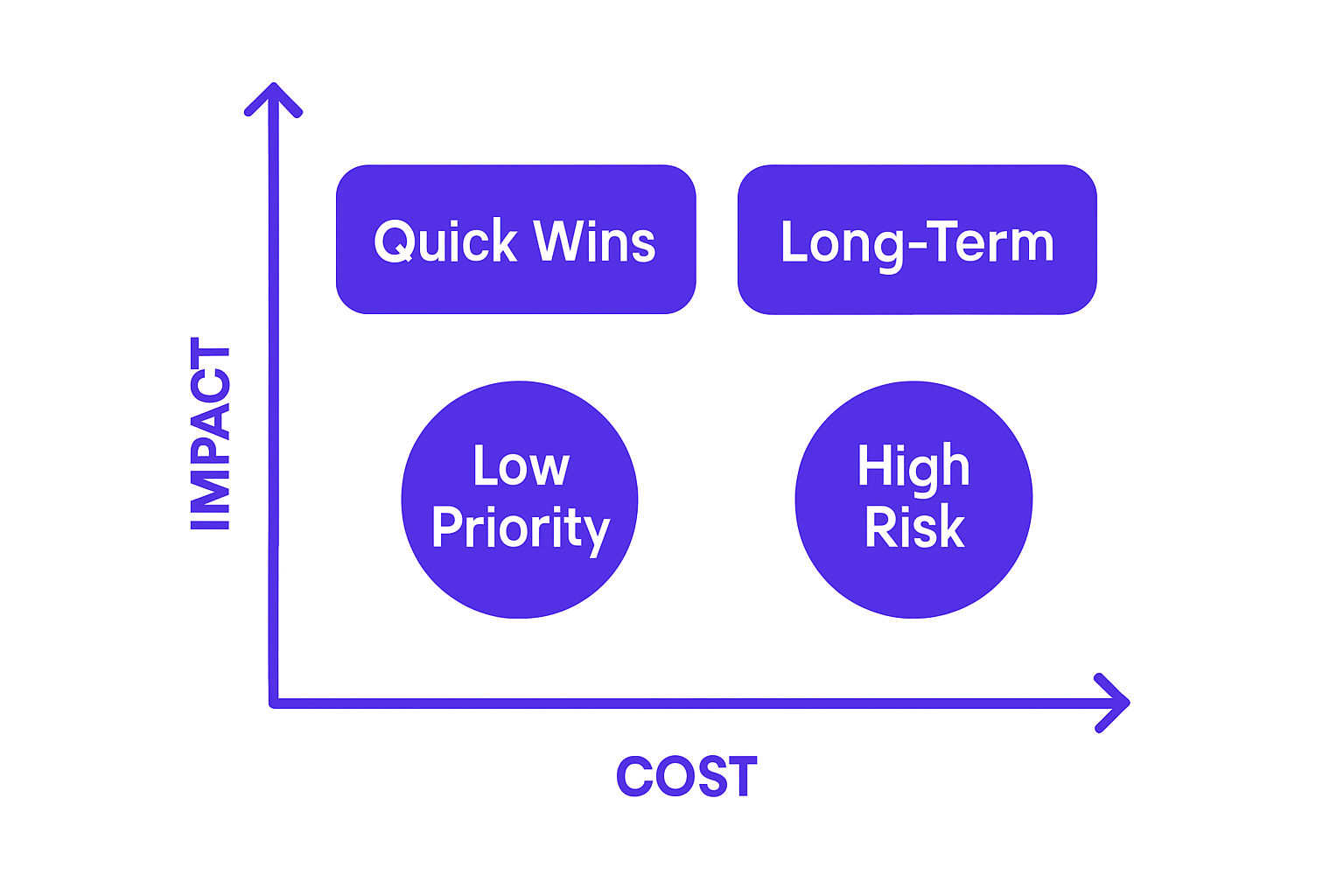
Cost optimization prioritization matrix: impact versus effort
If you've been watching your cloud bill climb and haven't had a live view of what's driving it, that changes with the right tooling in place. The Gartner research is consistent on this: real-time visibility is the single biggest predictor of whether organizations actually reduce waste or just talk about it.
Get in touch with our team to start with an infrastructure cost audit. We'll show you where the money is going before we recommend a single dollar of work.
Stop guessing at cloud costs. Start measuring in real time.
Frequently asked questions
How much cloud waste is typical for a mid-size company?
Most teams leak 15–30% of their cloud budget to idle resources, over-provisioning, and forgotten workloads. The larger your infrastructure, the worse the leak. GroovyMark WebX has audited dozens of cloud stacks and found that 80% of companies had redundant databases, spinning instances, or reserved capacity sitting empty. Once you implement real-time visibility and automated remediation, that leak drops to 5–10% within 90 days.
Can I optimize cloud costs without refactoring my application?
Yes, and that's where most quick wins live. Right-sizing instances, scheduling non-prod shutdowns, and switching to reserved instances can save 20–25% without touching code. Architecture refactors (removing full-table scans, migrating to event-driven patterns) unlock another 15–30%, but those take longer. Start with the low-hanging fruit: visibility and consumption controls. Then plan architecture work as a multi-quarter effort. GroovyMark WebX helps with both—we'll show you the numbers first so your team can decide what trade-offs matter.
What's the difference between real-time monitoring and monthly cost reports?
Monthly reports tell you after the damage. Real-time dashboards let you prevent it. If a database query suddenly starts consuming 5x more compute, a real-time alert catches it in minutes; you fix it before that $2,000 spike lands in next month's bill. GroovyMark WebX builds operations command centers that surface cost anomalies instantly, so your team can act immediately instead of discovering waste 30 days later.
How do I know if I'm ready for cloud cost optimization?
If your cloud bill is more than $5,000/month and you don't have a live dashboard showing what's driving that spend, you're ready. You don't need to wait for a full audit—start by exporting your last 90 days of cost data, tagging your resources, and setting up automated alerts. Most teams find their first 20% in savings within the first month just by turning off forgotten infrastructure and adjusting auto-scaling rules.
Will optimizing costs hurt performance or reliability?
Not if you do it right. The goal is to eliminate waste, not cut critical capacity. That means shutting down unused dev databases, not your production cache. GroovyMark WebX's approach measures both cost and performance in real time, so you see the impact of every change before it affects your users. We've helped clients cut costs by 30–40% while actually improving reliability, because better visibility reveals which resources actually matter and which ones were just noise.